Reyus Mammadli
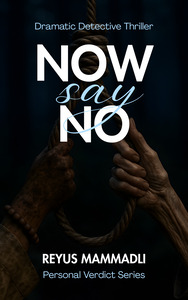
Now Say No

19th Century  ·  North America  ·  Personal Verdict Collection

Now Say No

A Historical Thriller of Revenge and Secrets

In a 19th-century North American village, someone is killing — and the murders look like executions. Deliberate, methodical, driven by revenge. An elusive killer has begun a deadly game that leaves no room for error.

The first victim turns out to have kept obscene drawings of women, disturbingly similar to women still living in the village. William Gordon, the justice of the peace, opens an investigation and prepares to send for help from the city — but no clear suspect emerges, and before the messenger can leave, a second murder strikes in the night. Fear settles over Norhill, and everyone waits for the city to answer.

Detective Jude Hargreaves arrives as an outsider. There are no fingerprints. No DNA. Only Hargreaves — a profiler who asks uncomfortable questions and follows the paths others avoid. His talent for making enemies is the price of his work, and the village has no other choice.

The case is a tangled skein with several loose ends. Which one is real?

A subtle hunt. Stunning revelations. No easy verdict.

Also available to read with Kindle Unlimited.

Start reading

1

1851. Pennsylvania. The village of Norhill.

Thomas Wilmore shifted, and the rope sank deeper into his neck. His arms were wrenched back behind him and lashed to the trunk, his legs stretched out in front and bound as well. By this hour the dusk had settled over the woods thick as wet cloth, and from below came the smell of rot and turned earth.

The first minutes hurt. Then the pain drained off somewhere below, and all that was left was his own breathing, which he could hear far too well. The rope wouldn't let him scream; then again, the woods wouldn't have answered a scream.

He wasn't alone. The man who had finished speaking less than a minute ago stood beside him and looked down at him the way you look at a shadow it's time to wipe away. Everything had been said.

There would be no mercy.

The man walked over to the tethered horse, took a shotgun from the saddle, and began loading it without hurry, like a teacher running through a lesson for the hundredth time: powder, wad, shot, wad again.

"What do you want?" Wilmore said. The rope ate half the sound.

There was no answer. When the gun was ready, the man raised his eyes.

Wilmore looked at him through tears and didn't hide them.

"It's good that you're crying, Tom," he said, and cocked the hammer. "The tears are very fitting. Don't you think?"

"Forgive me…" Wilmore said. "I really am sorry."

The man stepped forward and took aim. The moon stood behind Wilmore, and the shadow of the gun lay across his face. The muzzle drifted up and down — to his mustache, to his chin, and higher again — and Wilmore caught himself choosing where the shot would be easier to take.

The choice was cut off by the voice — level, almost tired, and still with that break in it that over the last few minutes had become more terrible than any knife.

"Now, Tom, do me a favor. Say: 'no.'"

"What do you need that for?" Wilmore got out, almost syllable by syllable. "You… you're insane!"

"Do you want to die?"

"No."

The shot.

The man didn't move. He stood there, looking at what was left; a leg jerked twice and went still. Then he checked his clothes. Clean.

"Come closer," he said, without turning toward the figure behind him. "Remember this. Every detail. We don't have much time."

Continue reading

The full story is available on Amazon.

Free to read with Kindle Unlimited.